

In the lines that follow, I will speak from my own experience as a human being, with an emotional baggage and a personal history that I keep working on and healing, and also as a mental health professional whose main motivation is to help other people discover or become aware of how to take charge of themselves and learn to look after themselves.
We often talk about thoughts and how they shape the way we see the world and the way we feel, but we rarely talk about the body. I would like to give the body some space – this body that we so often torment with judgements, that we treat as a tool, and that we demand should work properly so that we can do everything and get everywhere (and the faster, the better). In his book “The Burnout Society”, the Korean philosopher Byung-Chul Han speaks of achievement-subjects, meaning that human beings only count according to the results they obtain. “We push our bodies to the limit to reach every goal we set ourselves, even if it leads to utter exhaustion.” The pressure to produce and to never stop doing takes over everything and gives rise to mental health conditions such as depression and anxiety. We do not allow ourselves to relax, to stop and feel our body, to listen to our inner rhythm. In our day-to-day lives we are so disconnected from our bodies that we only seem to notice they exist when there is pain – and perhaps also, more and more, when we experience pleasure through them. The body: the great forgotten in our daily lives.
Something that may surprise you is that we feel emotions all the time. Emotions are, after all, chemical reactions in our body to our thoughts, to the stimuli we perceive (internally and externally) and to the interactions we have each day. Many of us seem to need to feel an emotion intensely before we realise we are feeling something, when the more common reality is that emotions are constantly present in us in a more subtle form. And as if that were not fascinating enough, the psychotherapist Marcelo Antoni explains in his book “The Four Basic Emotions” that we experience emotions in pairs (for example, fear and curiosity, anger and sadness…).
To be able to manage our emotions, decipher the messages they bring us (about how we are experiencing something in particular and how this affects our wellbeing or distress) and communicate them, it is essential that we know how to detect them, recognise them, feel them, see them, perceive them, and so on. It is when we fine-tune our listening to the body that we can access this information.
Here is an exercise you can try when you finish reading:
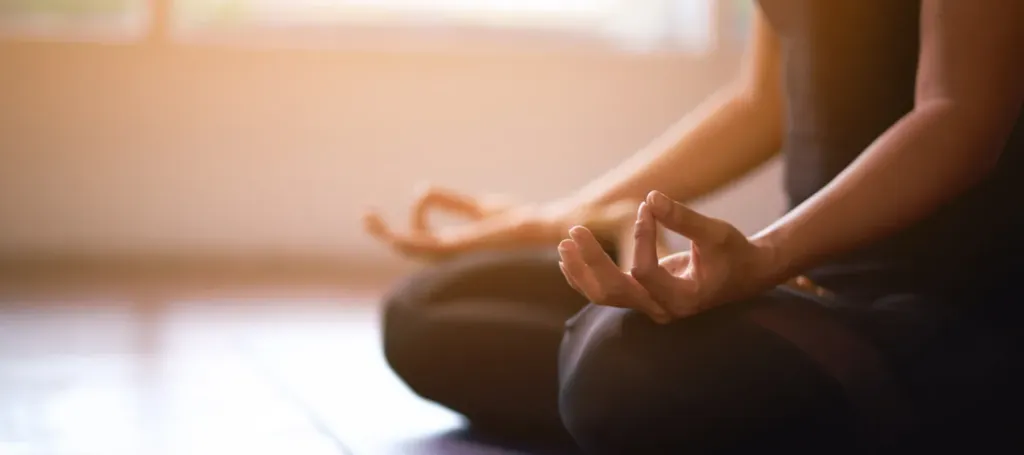
Find a comfortable position with your feet on the floor, close your eyes and bring your attention to your breathing. Notice how far the air you breathe in reaches, which parts of your body move as the air comes in and goes out, and whether there is any area or point of tension – where you feel it, what it is like, and so on.
Spend a few moments observing what you notice. Now that your attention is focused on the sensations in your body, you can do a slow, gradual “body scan”, paying attention as you move through the different parts of your body, from the crown of your head to the tips of your toes. In doing so, you will probably notice a sensation you were not aware of before you started the exercise. That sensation, however insignificant it may seem, can give you information about how you are and how you feel right now.
Sometimes emotions show up in us as small physiological changes, such as a slight rise in body temperature (when we feel anger, for example), an increased heart rate (when we experience fear, for example), a slight feeling of pressure in the throat (perhaps due to sadness or anger), an opening of the body (possibly joy) or tension in the jaw (which may be a sign of suppressed anger).
Stopping and observing is something that takes practice. By increasing our body awareness, we will be able to notice sooner how we are feeling and, as a result, decide how to support ourselves appropriately with whatever we are feeling.
In the end, the only person who can truly know how you feel at any given moment is you, and that is why listening is so necessary. I am sure that if you keep practising, you will be able to notice sooner when you need, for example, to set a boundary (something essential to avoid agreeing to things you don’t really want to do and building up resentment, lashing out at someone else or getting caught up in unhelpful thoughts that cause suffering). You will also learn to recognise and meet your needs, gaining more clarity about how different things make you feel.