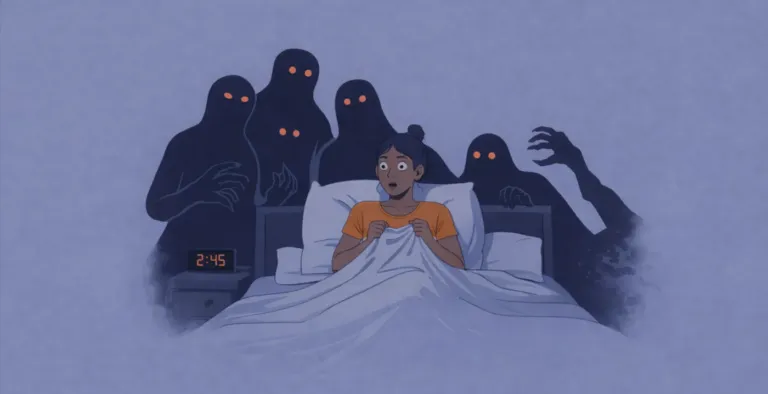



Facing loss is inevitable over the course of our lives, and although the word “grief” is familiar to everyone, when it arrives it is still an overwhelming experience that can often leave us feeling completely lost. There are a number of myths associated with grief which, instead of helping those going through the process of coming to terms with a loss, make them feel even more pain, guilt or frustration, or prevent the process from moving forward in an appropriate and healthy way.
We would like to share with you some of the most common myths surrounding grief and, in doing so, invite you to change these unhelpful beliefs, which only make the experience harder.
Grief ends when you manage to forget → Contrary to this myth, grief comes to an end when we learn to live with the loss without it causing us pain. Coming to bear the loss as a natural part of life does not mean losing our memories or forgetting what we had; rather, it involves being able to adapt to the new reality we face after the absence of something or someone we loved and valued. Our bond with what we have lost turns into something different, becoming a more intimate relationship that is sustained precisely through memories and thoughts.
People who are grieving need to be distracted; talking about it only causes unnecessary harm → This goes hand in hand with myth number one. Many people going through grief need to be able to talk about it in order to work through it. Others will prefer not to (depending on what stage or point they are at). Even so, offering a space where they can freely express the feelings that come with this process is always a great help, never a nuisance. Offering to talk about the loss whenever the person needs to and feels ready is a good idea and will be a great help.
The pain goes away if you ignore it → Ignoring the emotions that arise from grief can mean that a loss is not properly processed, which is directly linked to painful and complicated grieving processes, and sometimes even to chronic grief. Blocking out the pain can lead to what is known as “frozen grief”, which, because it has not been properly worked through, will resurface again and again in the future, each time with more entrenched and confusing symptoms for the person.
Grief is the same for everyone and there is only one way to go through it → A great many factors influence how grief is processed – as many as there are people – which is why we cannot talk about a single kind of grief. Each person needs a different amount of time and will also react differently, depending on their life story, their experience of previous losses, their relationship with what they have lost, and much more besides. It is very important not to impose on a grieving person what they should or should not do.
Grief always refers to the death of a loved one → We generally associate loss with death and, therefore, with the loss of a person we loved and valued. Despite this, grief can refer to many kinds of loss, some external (for example, the end of a romantic relationship or a friendship, a separation, the loss of a possession or a home, the loss of a job, etc.) and others internal (for example, the loss of wishes, abilities or personal characteristics, positions or status, etc.).
“Be strong” → Feeling sad and talking about it is not a sign of weakness; it is a normal and desirable part of the grieving process. We need to let our emotions flow so that we can feel the support and warmth of those who want to help us and who understand what we are going through. It is normal, and it is fine, to feel vulnerable in the face of loss.
“You need to take your mind off it” → There are times for taking your mind off the pain and times for focusing on it. It is important for a person who has suffered a loss to have time to reflect and experience their emotions – in other words, to get in touch with their pain. Both are necessary.
Grief lasts a year → Because it is such a complex and personal process, the length of grief varies greatly from one person to another. It is true that certain stages have been described and estimated timeframes set for each of them, but all the experts agree that grief lasts as long as the person needs to process the loss. Trying to set a time limit is not very useful and will not help the grieving person go through it in a healthier way.
Grief is like depression → Grief is not an illness (even though it shares some symptoms with depression), but a natural and adaptive response to change. That said, when grief is not properly processed, it can lead to mental health problems.
Time heals everything → Grief is an adaptive response; in other words, it is not a process we have to get over, but something we learn to live with as we gradually adapt to and integrate the absence of what we have lost. It is important to remember that grief is an active process in which the person plays the leading role. That is, it is the person who carries out this process of adaptation over time. Time on its own, however, does not heal anything (nor should it).
Grief is a linear process and, once it ends, life goes back to normal → Grief is a dynamic process with stages, but not everyone necessarily goes through all of them or in the same order. As a process, it is a transition in which the aim is adaptation, not recovery. When we suffer a loss, every aspect of our life is changed by the absence, and we need to learn to integrate that loss into the new normal that lies ahead of us.